






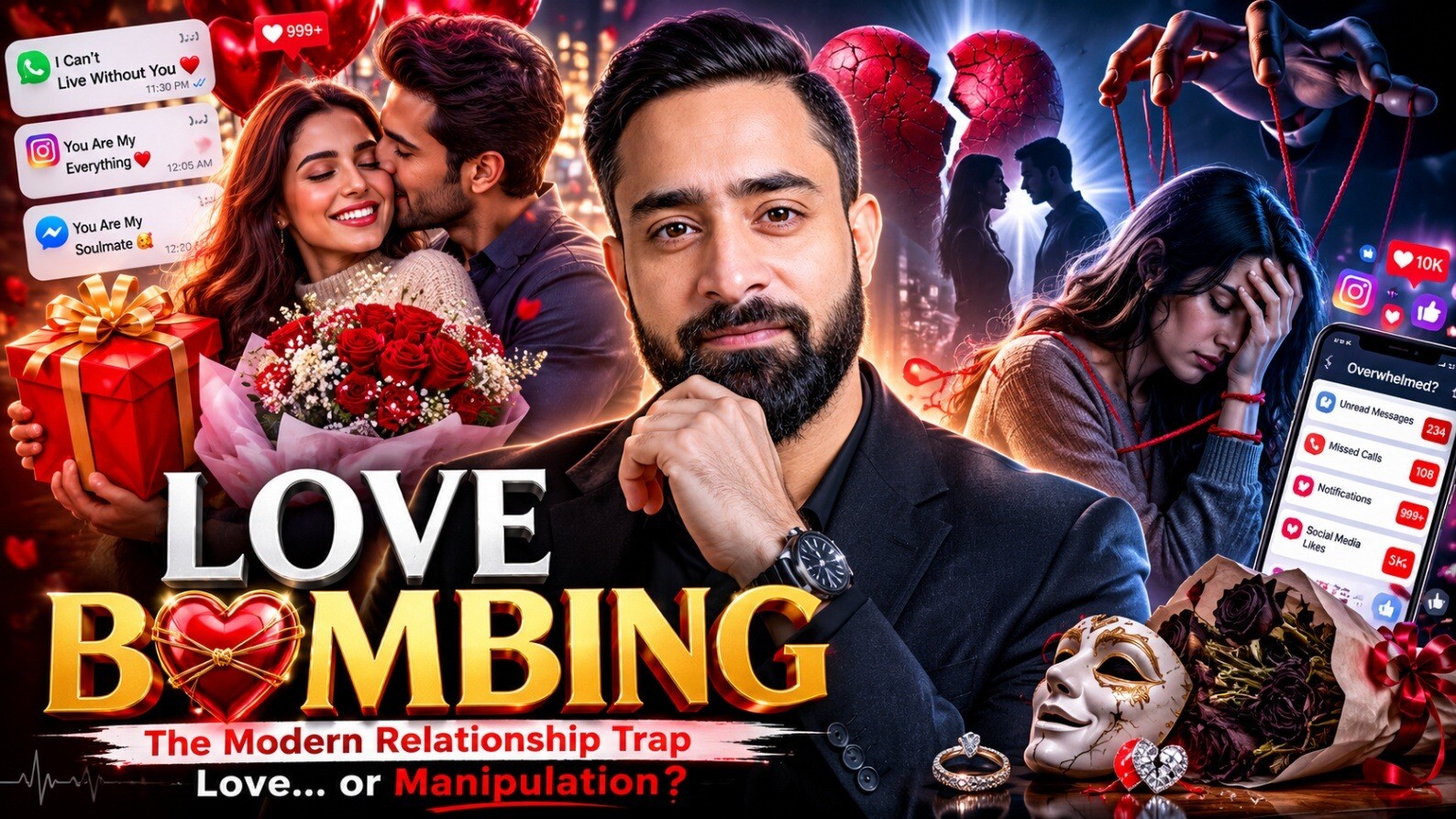
Love Bombing often shows up disguised as a dream. You meet someone, and suddenly your phone won’t stop buzzing. Compliments pour in, gifts arrive, and you’re told you’re “the one” within days. It feels intense, addictive—even flattering. But here’s the uncomfortable question: is it love, or is it manipulation?
In today’s fast-moving dating world, where attention is currency, this kind of overwhelming affection can feel normal. That’s exactly why it’s dangerous. What looks like passion at first can quietly turn into control, confusion, and emotional dependency. If you’ve ever felt swept off your feet too quickly, only to feel drained later, you’ve already brushed against this pattern.
Table of Contents
ToggleTable of Contents
- What is Love Bombing?
- Why Love Bombing Happens
- The Psychology Behind Love Bombing
- Signs You Are Being Love Bombed
- Love Bombing vs Genuine Love – Key Differences
- Impact of Love Bombing on Mental Health
- How to Deal with Love Bombing
- Can Love Bombing Turn into a Healthy Relationship?
- Conclusion
- FAQs
What is Love Bombing?
Love Bombing is a form of emotional manipulation where one person overwhelms another with excessive affection, attention, and praise—usually at the very start of a relationship. The goal isn’t genuine connection. It’s fast emotional capture.
It often begins with constant texting, long calls, surprise gifts, and exaggerated compliments. You’ll hear things like “I’ve never felt this way before” or “You’re my soulmate” within days or weeks. At first, it feels exciting. Who doesn’t want to feel chosen and admired?
But here’s the catch: the intensity is artificial. It’s not built on understanding or shared experiences. It’s built on attention overload designed to create quick attachment. Once emotional dependency forms, the behavior often shifts—sometimes dramatically.
In real relationships, affection grows. In love bombing, it explodes.
Why Love Bombing Happens
This behavior isn’t random. It usually comes from specific psychological motives tied to control and insecurity.
At its core, toxic dating behavior like love bombing is about power. The person initiating it wants to fast-track emotional closeness so they can influence your decisions, feelings, and boundaries. Instead of building trust gradually, they skip the process entirely.
There are a few common drivers behind it:
- Validation seeking: Some individuals crave constant admiration. By overwhelming you, they secure your attention quickly.
- Fear of abandonment: Intensity becomes a shortcut to avoid being left.
- Control behavior: The faster you get attached, the easier it becomes to manipulate your choices.
- Insecurity masked as confidence: What looks like bold romance is often deep emotional instability.
The uncomfortable truth: it’s less about how much they like you and more about what they need from you.
The Psychology Behind Love Bombing
To understand love bombing in relationships, you have to look at underlying emotional patterns, not just surface behavior.
One key factor is attachment theory. People with anxious or disorganized attachment styles often struggle with emotional regulation. They may rush intimacy because they fear losing it before it even stabilizes.
Another layer involves traits commonly seen in narcissistic relationships. Not every person who love bombs is narcissistic, but the pattern overlaps. The cycle usually looks like this:
- Idealization (intense affection)
- Devaluation (criticism, withdrawal)
- Control (guilt, manipulation)
During the initial phase, you’re placed on a pedestal. You’re perfect. You’re everything. But perfection is impossible to maintain. Once reality creeps in, the same person may pull back, become distant, or even critical.
This push-pull dynamic creates emotional confusion. You start chasing the version of them that existed at the beginning.
That’s not love. That’s conditioning.
Signs You Are Being Love Bombed
Recognizing red flags in relationships early is the difference between staying grounded and getting pulled in.
Watch for these patterns:
- Too much, too fast: Intense declarations within days or weeks
- Constant communication: Non-stop texting or calling, expecting immediate replies
- Over-the-top compliments: You’re “perfect” without them truly knowing you
- Premature commitment talk: Marriage, future plans, or moving in very early
- Excessive gifts or gestures: Especially when it feels disproportionate
- Pressure disguised as affection: Guilt if you don’t match their intensity
- Isolation tactics: Subtle attempts to pull you away from friends or family
Individually, these may seem harmless. Together, they form a pattern. And patterns don’t lie.
Love Bombing vs Genuine Love – Key Differences
Here’s where most people get confused. Intensity isn’t automatically unhealthy. But context and consistency matter.
| Aspect | Love Bombing | Genuine Love |
|---|---|---|
| Pace | Fast, overwhelming | Gradual, steady |
| Intent | Control, validation | Connection, understanding |
| Communication | Constant, demanding | Respectful, balanced |
| Boundaries | Ignored or pushed | Respected |
| Emotional stability | High highs, sudden drops | Consistent, predictable |
| Focus | Idealized version of you | Real, evolving you |
Real love doesn’t feel like a rollercoaster in the first week. It feels like stability building over time.
Impact of Love Bombing on Mental Health
This isn’t just a dating issue. It’s a mental health issue.
Being exposed to emotional manipulation like love bombing can create deep psychological effects. At first, you feel special. Then you feel confused. Eventually, you may feel anxious or dependent.
One major impact is emotional dependency. When someone floods you with attention and then pulls back, your brain starts craving that initial high. It’s similar to intermittent reinforcement—the same mechanism behind addictive behavior.
Other effects include:
- Anxiety from unpredictable behavior
- Self-doubt when affection turns into criticism
- Loss of identity as you try to maintain their approval
- Difficulty trusting future partners
The damage isn’t always obvious while it’s happening. It shows up later—when you realize you tolerated things you normally wouldn’t.
How to Deal with Love Bombing
You don’t handle this with emotion. You handle it with clarity and boundaries.
First, slow everything down. If someone is rushing the relationship, resist matching their pace. Real connection doesn’t collapse when slowed—it reveals itself.
Second, set boundaries early. Pay attention to how they react. Respect means they adjust. Manipulation means they push harder.
Here’s what actually works:
- Limit communication frequency if it feels overwhelming
- Avoid making quick commitments
- Stay connected to your support system
- Observe consistency, not intensity
- Trust discomfort over excitement
That last point matters. Your gut often notices manipulation before your mind does.
Also Read – MicroShip: Astrology & Psychology Behind Gen-Z’s Relationships, Nano Ship: The Hidden Logic Behind Gen-Z’s, Situation Ship: The Reality of Modern Relationships, Texting Ship: Astrology, Psychology & Karmic Insights, Benching: The Psychology Behind Modern Dating’s, Love Bombing: The Modern Relationship Trap, Love Bombing: The Modern Relationship Trap, Breadcrumbing: Why They Keep You Hooked, Friends With Benefits: Reality of Modern Relationships, Sneaky Link: The Hidden Side of Modern Dating, Haunting in Modern Relationships: Insights for Gen-Z’s, Ghosting: The Harsh Reality of Modern Dating Culture
Can Love Bombing Turn into a Healthy Relationship?
Short answer: rarely.
Long answer: only if the behavior is recognized early and actively corrected. That requires self-awareness from the person doing it, not just tolerance from you.
If someone genuinely adjusts—slows down, respects boundaries, and shows consistent behavior over time—there’s potential. But if the pattern continues (intense affection followed by withdrawal or control), it’s not going to fix itself.
People don’t accidentally manipulate repeatedly. Patterns are choices.
If you’re waiting for the “good version” of them to come back permanently, you’re chasing something that was never stable to begin with.
Conclusion
Love Bombing works because it feels good—at first. That’s what makes it effective. But real relationships aren’t built on emotional extremes. They’re built on consistency, respect, and time.
Not all intense love is real love. Sometimes it’s just fast-tracked attachment with hidden strings attached.
If it feels too perfect too soon, it usually is.
FAQs
1. What is Love Bombing in simple terms?
Love Bombing is when someone overwhelms you with excessive affection and attention early in a relationship to create quick emotional attachment, often for control or validation.
2. How do I know if it’s Love Bombing or real love?
Look at the pace and consistency. Real love grows steadily and respects boundaries. Love Bombing feels rushed, intense, and often comes with pressure.
3. Is Love Bombing always intentional?
Not always. Some people act this way due to insecurity or attachment issues. But intentional or not, the impact can still be harmful.
4. Can Love Bombing happen in long-term relationships?
Yes. It can reappear during conflicts or breakups as a way to regain control or emotional influence.
5. How do I recover from Love Bombing?
Create distance, rebuild your emotional independence, and reconnect with your support system. Awareness is the first step toward breaking the cycle.